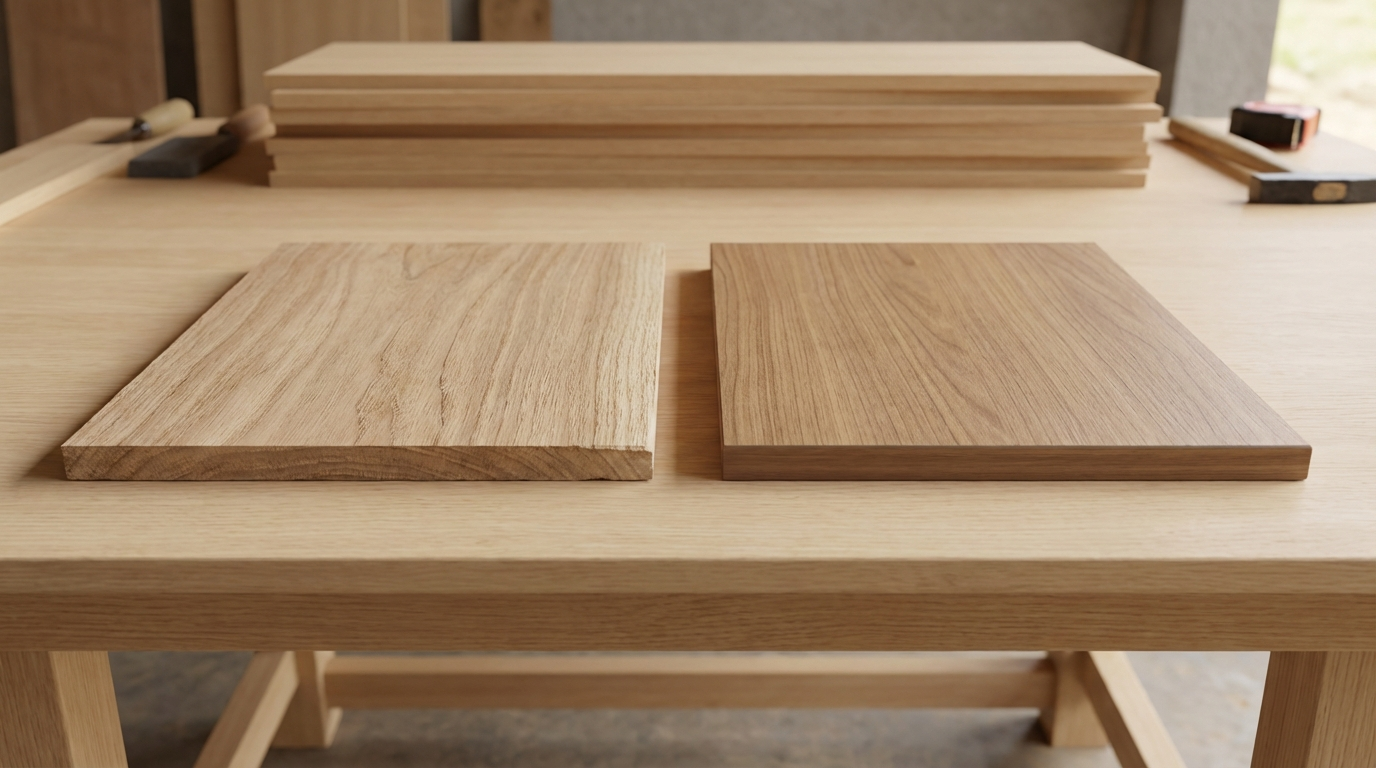
If you’re planning for furniture to purchase or planning the interior woodwork you want to build for your home, you’ll see words such as Lasani, MDF, and Solid Wood used constantly. For the average person it is difficult to grasp the reason these materials come with massively different costs and why their quality is significantly different.
Many salespeople will attempt to convince you that their engineered products such as Lasani and Medium-Density Fibreboard (MDF) are the same as real solid wood, however it’s not the case.
Although man-made boards can have the potential to be useful in affordable construction, they differ from solid hardwood in the process of making them and how they react to water, their overall durability, and the impact they have on the appearance of your property and modern furniture designs. Knowing these key aspects is vital to making an informed decision when choosing materials for your home and modern furniture projects.
How These Materials Are Made
To understand how these materials work in a different way, you must first understand the process of making them. MDF as well as Lasani are both man-made industrial products from factories and are widely used in the production of furniture in Pakistan. They are produced from leftover softwood pieces, wood shavings, and sawdust, which are ground down into small wood fibres. These powdery fibers are then blended with a large amount of chemical glues made from synthetic resins and formaldehydes. The mixture is subjected to intense heat and hydraulic pressure to form smooth, solid sheets. Lasani is merely a well-known brand name that sells high-quality MDF sheets that are commonly used in local markets for furniture in Pakistan applications.
Solid wood On the other hand is a completely natural product. It comes from trees that have grown slowly over the years including Oak, Walnut, Teak, Deodar, or Rosewood. The wood is gathered as pure timber logs, then cut into natural planks, then dried to eliminate moisture. The wood is not treated with chemicals, glues or synthetic binding materials are used to make the foundation of a solid plank of wood. It is pure nature and formed by carpentry.
The Reaction to Water and Humidity
The biggest difference between sheets made by man and solid timber is the way they perform when confronted with humid indoor or outdoor water levels.
MDF and Lasani have a major flaw: they have no protection against moisture. Since they are composed of very compressed powdery fibers they react with water just like dry cardboard. If water spills onto the surface of an MDF cabinet or Lasani door it absorbs the liquid immediately.
After being wet, the glue inside is broken down and the fibers compressed expand quickly. The board will expand, then blister, and eventually become permanently soft and brittle. It is impossible to repair damage caused by water in MDF, especially when it affects wooden bedroom design elements and finishes. Your only choice is to dispose of it and replace the entire piece.
Solid wood can also be affected by humidity, however it manages this in a totally natural way. It expands a little when it’s damp, but shrinks again as it dries out. Because it is a constant solid cellular structure that was created naturally, it will not disintegrate, flake off or change into mush when wet. If a table made of solid wood is wet, dry it off then let it sit for a while or sand it down and repaint it or repolish it and restore it to its original glory.
Lifespan, Strength, and Durability
If you purchase an item of high-quality hardwood furniture you’re investing in a long-term project that could last from fifty to 100 years. Solid wood has incredible natural durability. The interlocking patterns of organic grain allow a solid wooden shelf to accommodate huge televisions or books for years without bends or falling.
In addition, solid wood is able to hold nails and screws with a firm grip. You can build the bed from solid wood and then dismantle it for the purpose of moving to a new home, and then rebuild it several times without damaging the wood joints.
MDF or Lasani furniture is not able to handle the stress of structural construction or multiple house relocations. The compressed interior of the furniture does not secure screws as time passes. If you take off screws on the screws of an MDF wardrobe to relocate it to a new home the screw holes are often slack and then turn into loose powder, rendering the furniture wobbly and unstable. These engineered boards generally have the shortest lifespan of three to seven years with the conditions of daily use. Also, their capacity for weight is limited which causes them to buckle when pushed to the limit by heavy loads.
Beauty, Craftsmanship, and Value Retention
There is also an economic and emotional gap between these two materials. Solid wood furniture is characterized by an individual soul and timeless beauty. Every piece of solid wood has distinct grain patterns which means that every dining table or beds are the same. Expertly skilled craftsmen can cut intricate, stunning designs directly into the surface of the wood, resulting in beautiful design heirlooms.
Financially, solid wood has its value in resales. It is considered to be an asset that becomes attractive and appealing with the passage of time.
MDF or Lasani sheets are uniform, flat and uncharacteristic. Because they’re made of compressed powder, it is not possible to make intricate patterns in them without breaking the material. To give them a professional look factories have to put a laminate sheet of plastic or a fake wood pattern over top.
When this thin layer gets chipped, scratched or peels off its edges, then the nasty grey, compressed material beneath becomes visible, making furniture appear cheap and damaged. It’s not a resale product and is not sanded or polished as often as real wood.
Conclusion
Although compressed materials such as Lasani and MDF are useful for making furniture that is low-cost and short-term, they can’t compare to the wood quality of real wood. Solid wood is a premium product that offers nature-inspired strength, better water resistance, and traditional design that man-made boards cannot duplicate. Selecting solid wood means you spend your money for long-term luxury and lasting design that adds real economic value to the family’s home through superior wood quality.